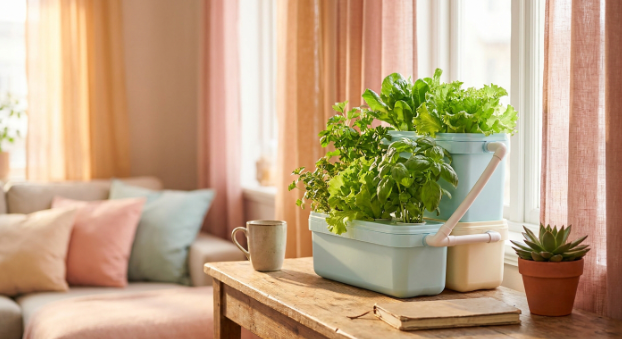
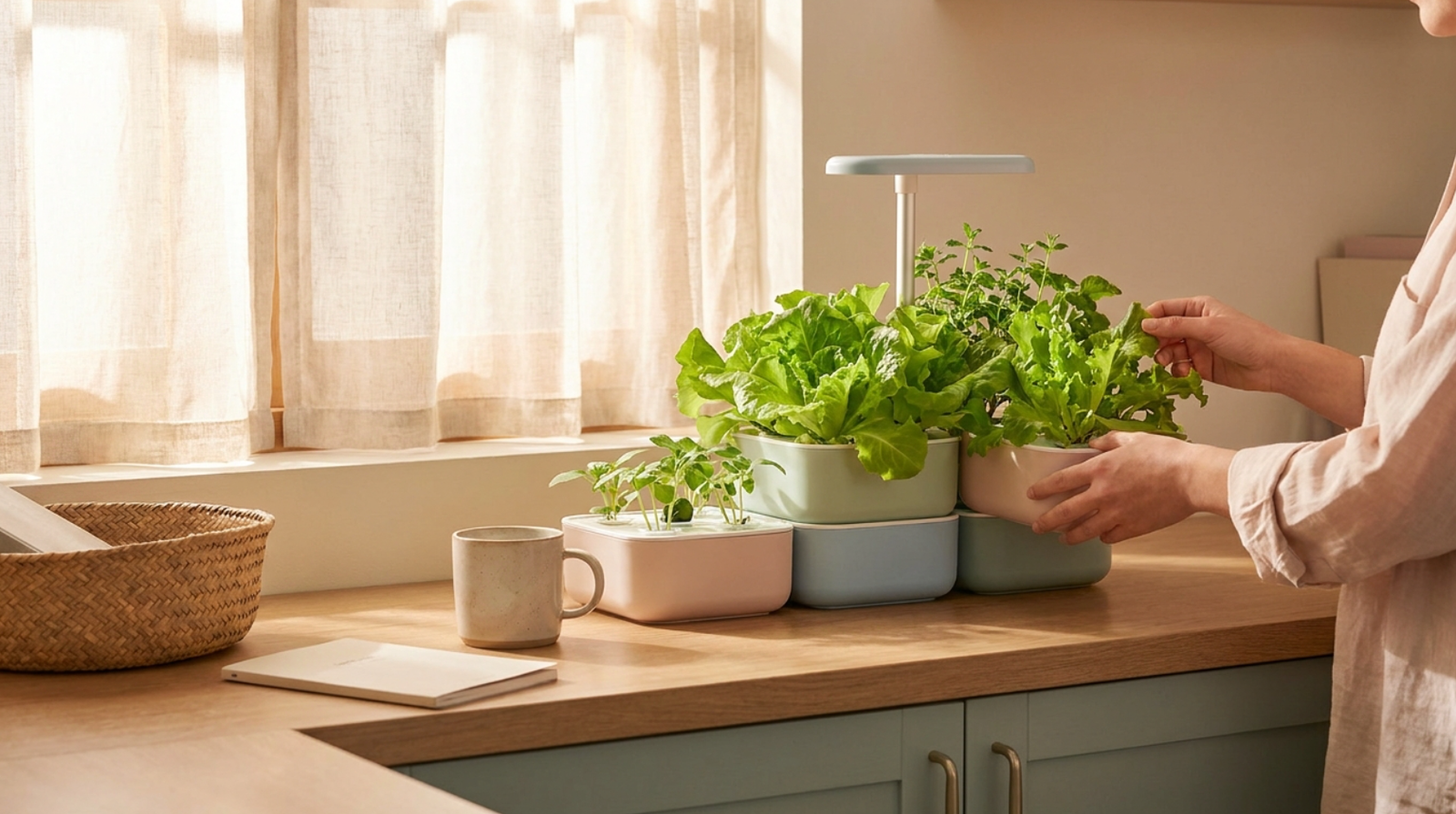
You can grow lettuce, basil, and mint indoors with nothing but water and a few cheap supplies.
No backyard. No dirt. No experience needed.
Here’s how to set up your first hydroponic system in under an hour – and start harvesting in 3 to 4 weeks.
What You Need
Most of this costs under $30. You might already have half of it at home.
- A container: A 5-gallon bucket, plastic storage bin, or large glass jar
- Net pots: Small plastic baskets with holes so roots grow into the water
- Growing media: Clay pebbles (LECA) or coconut coir to hold plants upright
- Hydroponic nutrients: Liquid plant food you add directly to the water
- Seeds or seedlings: Stick with easy crops (more on that below)
- A light source: A sunny window works; a simple LED grow light works better
Step 1: Pick Your Spot
Your plants need two things from their location: steady temperature and good light.
Temperature: Keep the room between 65°F and 75°F. Too cold and growth stalls. Too hot and you get algae or cooked roots. Stay away from drafty doors and heating vents.
Light: A south-facing window is a solid start. But indoor light is weaker than most people think. If your plants grow tall, skinny, and lean toward the window, they need more. A small LED grow light placed a few inches above the leaves fixes this fast.
Step 2: Pick Your Watering Style
Two options here: passive or active.
Passive (start here). The Kratky Method uses zero moving parts. Your plant sits in a net pot above a water reservoir. As it drinks, the water drops, creating an air gap. Roots breathe through the gap and feed from the water below. Set it up and check it once or twice a week. That’s it.
Active. Pumps move water and oxygen to the roots. Faster growth, but more parts, more cost, more upkeep. Save this for later.
Step 3: Pick Easy Crops
The biggest beginner mistake? Trying to grow tomatoes on day one. Tomatoes are heavy feeders and finicky.
Start with these instead:
- Lettuce: The easiest hydroponic crop. Harvest leaves in 3 to 4 weeks.
- Basil, mint, cilantro: Smell great, grow fast, and you can harvest them over and over.
- Spinach: Thrives in cooler indoor temps and simple water setups.
Fast results build confidence. Confidence builds momentum.
Step 4: Set Up Your Reservoir
Fill your container with tap water. If your city water is heavily chlorinated, let it sit for 24 hours so the chlorine evaporates.
Add hydroponic nutrients per the bottle’s instructions – usually a capful or two per gallon. Stir well.
Place your net pots (with growing media and plants) into the container lid. Make sure the bottom of each pot touches the water so young roots can reach it. As the plant grows, roots chase the water level down.
Step 5: Check In Weekly
Passive systems need very little attention. Check these things once or twice a week:
- Water level: If it drops past halfway, top off with fresh nutrient solution.
- Root color: White or creamy roots are healthy. Brown, slimy roots need more air.
- Algae: Green gunk means light is getting into your reservoir. Use an opaque container, or wrap clear jars in aluminum foil.
Troubleshooting
Yellow leaves? Your plants are hungry. Check nutrient levels. If the water is more than a month old, dump it and mix a fresh batch.
Tiny bugs? Indoor plants still attract pests like aphids. Skip harsh chemicals since you’re growing food. A spray of water with a tiny drop of dish soap usually handles it.
Quick Reference
- Setup time: 30 to 60 minutes
- Best spot: Stable room, 65-75°F, good light
- Top starter crops: Lettuce, basil, mint
- Pro tip: Opaque containers prevent algae
Your Next Step
Start small. Pick one crop. Set up one container. Get your first harvest under your belt.
Once you’ve run a successful passive system, you can scale up or try active setups. If you want to turn this into a side hustle, commercial guides from places like Bootstrap Farmer can point you in the right direction.